Understanding Portion Sizes: The Hand Guide, the Plate Method and Portion Distortion
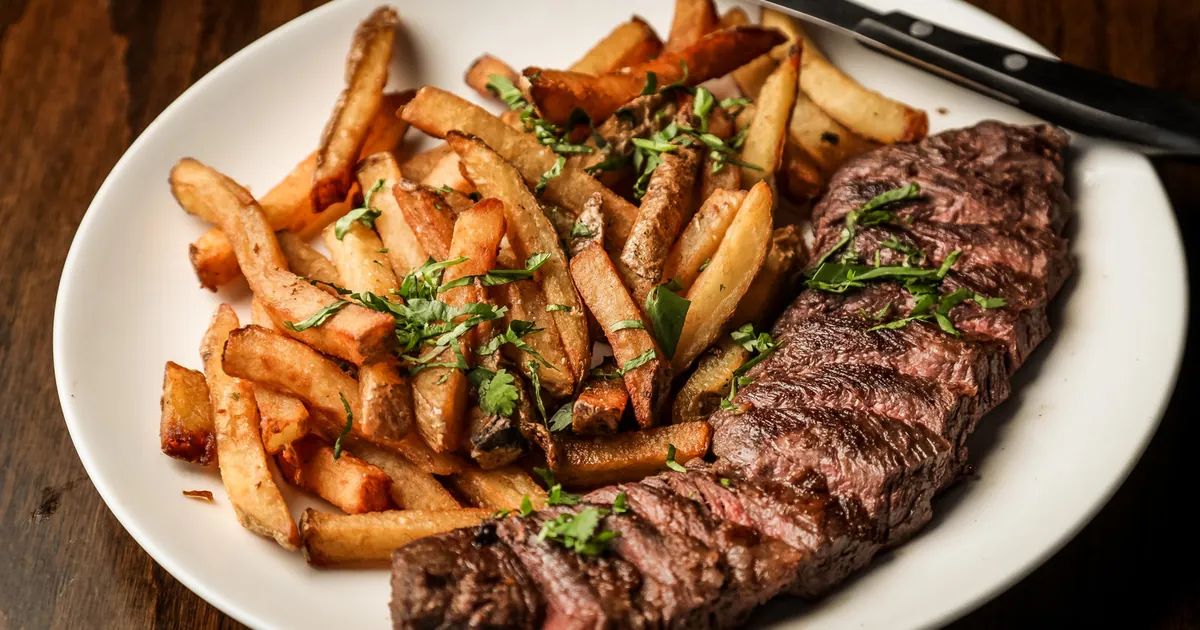
You can eat all the "right" foods and still struggle with your energy intake if portions quietly creep up. The good news is that you don't need kitchen scales or an app. Your hand and your plate are surprisingly accurate everyday tools.
- A serving (on a label) and a portion (on your plate) are not the same thing.
- Bigger portions and plates reliably lead people to eat more.
- The hand guide: palm of protein, fist of vegetables, cupped hand of carbs, thumb of fat.
- The plate method: half vegetables and fruit, a quarter whole grains, a quarter protein.
Serving versus portion
A serving size is a standard amount a manufacturer or guideline uses to describe nutrition — for example "30 g of cereal" on a box. A portion is what you actually eat. The two are often very different: many people pour two or three times the stated serving of cereal, pasta or crisps. When you compare labels, always check the serving size first, then think about how many of those servings are in your bowl.
Portion distortion: why "normal" keeps getting bigger
Over recent decades, the typical size of many packaged foods, restaurant meals, bagels, muffins and soft drinks has increased. The US National Institute of Diabetes and Digestive and Kidney Diseases describes this as "portion distortion": when large portions become normal, our sense of what a reasonable amount looks like shifts too.
This matters because we tend to eat what is in front of us. A 2015 Cochrane systematic review, which pooled dozens of experimental studies, concluded that people consistently eat and drink more when offered larger portions, larger packages or larger tableware. The authors estimated that removing larger portion sizes from the diet could meaningfully reduce the energy people consume. The effect held regardless of age, sex or body weight — in other words, it isn't a willpower problem; it is how humans respond to their environment.
The hand guide
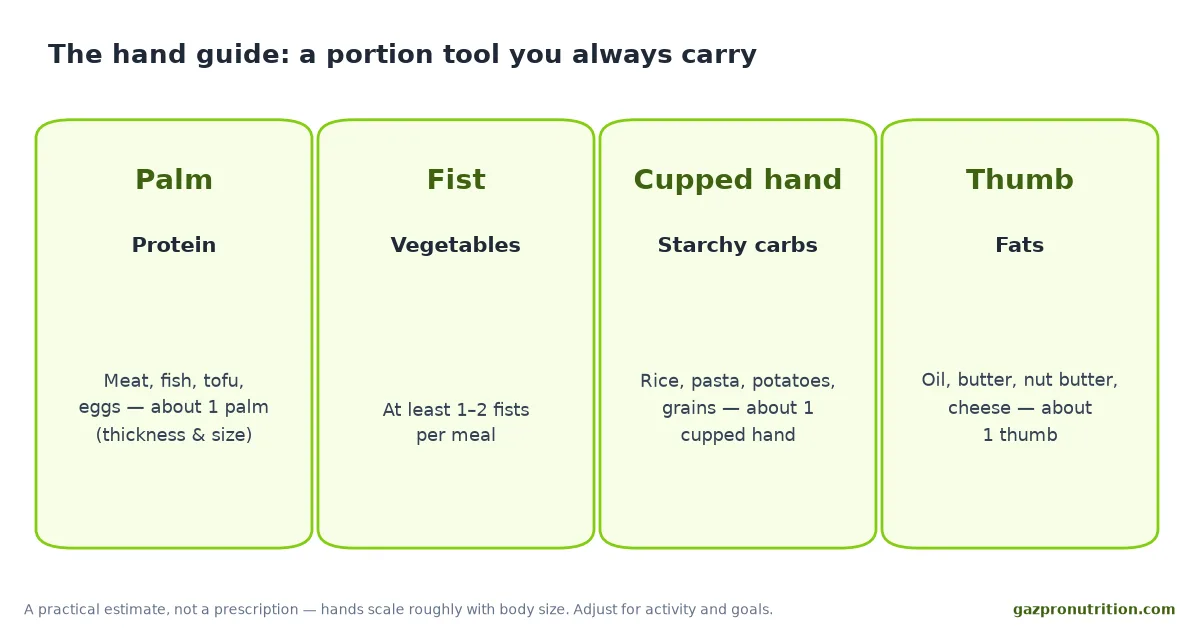
Your hand is always with you, and hand size scales roughly with body size, so it is a useful personal measuring tool. The guide below is a starting point for a main meal; more active people, or those with higher energy needs, may need more.
| Food group | Hand measure | Examples |
|---|---|---|
| Protein | 1 palm (size and thickness) | Chicken breast, fish fillet, tofu, 2 eggs, a cup of cooked beans |
| Vegetables | 1–2 fists | Salad, broccoli, carrots, peppers, leafy greens |
| Starchy carbohydrates | 1 cupped hand | Rice, pasta, potatoes, oats, bread (about 1 slice) |
| Fats | 1 thumb | Oil, butter, nut butter, cheese |
| Fruit | 1 fist / 1 medium piece | An apple, a banana, a handful of berries |
The balanced plate method
If the hand guide feels fiddly, the plate method is even simpler. Picture your plate divided into sections. The Harvard T.H. Chan School of Public Health's Healthy Eating Plate suggests filling half with vegetables and fruit, a quarter with whole grains and a quarter with healthy protein, using healthy oils in moderation and drinking water. The UK's Eatwell Guide uses similar principles across a whole day.
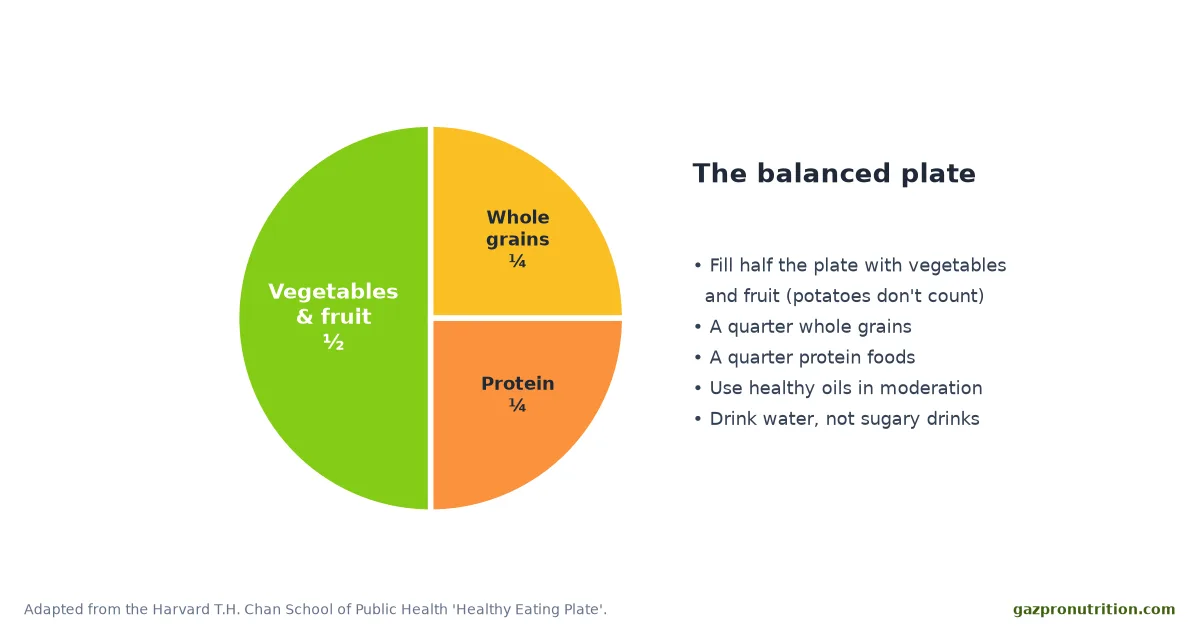
The plate method works for mixed dishes too. With a curry or stir-fry, for example, serve a smaller scoop of rice, a generous portion of the vegetable-rich main, and add a side salad or extra vegetables to bring the plate back into balance. Our guide on building a balanced plate for any goal shows how to adjust the proportions for training or weight goals.
Calibrate your eye once
For one week, try weighing or measuring a few foods you eat often — your usual pour of cereal, a portion of pasta, a spoon of peanut butter, a glass of juice. Most people are surprised by at least one of them. You don't need to keep weighing forever; the point is to reset your visual sense of what a portion looks like.
- Cooked pasta or rice, 1 cupped hand ≈ 75–100 g
- Meat or fish, 1 palm ≈ 90–120 g
- Cheese, 1 thumb ≈ 25–30 g
- Peanut butter or oil, 1 thumb ≈ 1 tablespoon
Change the environment, not just your willpower
Because portion size effects happen largely without awareness, small changes to your surroundings tend to work better than trying to "just eat less".
- Serve from the kitchen rather than putting serving dishes on the table, so seconds require a deliberate decision.
- Use smaller bowls for foods that are easy to over-serve, such as cereal, pasta and ice cream.
- Decant snacks into a small bowl instead of eating from the packet.
- Bulk up with vegetables: adding extra vegetables to pasta, soups and stews increases the volume of the meal without adding much energy.
- Slow down: pausing halfway through a meal gives your fullness signals time to catch up.
When portions need to be different
These guides describe typical adult meals. Children, older adults, athletes, pregnant or breastfeeding women and people with certain medical conditions may need different amounts. If you are trying to gain weight, recover from illness or manage a condition such as diabetes, a registered dietitian can help you set portions that match your needs. For a rough idea of your own energy needs, try our calorie calculator.
Frequently asked questions
What is a normal portion of protein?
A practical guide is about one palm-sized serving of meat, fish, tofu or eggs per meal, roughly the size and thickness of your palm.
Is a portion the same as a serving?
Not quite. A serving is a standard amount used on labels; a portion is how much you actually put on your plate, which is often larger.
Do I need to weigh my food?
No. Weighing can be useful for a short time to calibrate your eye, but tools like the hand guide and plate method work well for everyday eating.
Why do I eat more from a bigger plate?
Research consistently shows people eat more when offered larger portions, packages and tableware, often without noticing.
References
- Cochrane Review — Portion, package or tableware size for changing selection and consumption of food, alcohol and tobacco (Hollands et al., 2015)
- Harvard T.H. Chan School of Public Health — Healthy Eating Plate
- NHS — The Eatwell Guide
- British Heart Foundation — Portion size guide
- NIDDK — Just Enough for You: About Food Portions
This article is general information and not a substitute for personalised advice from a doctor or registered dietitian. Charts and graphics on this page were created by Gazpro Nutrition from the sources listed; the lead photo is a real photograph licensed from Burst by Shopify and credited beneath the image. Spotted an error? See our corrections policy.