Eating Out Healthily: A Practical Guide to Restaurants, Takeaways and Social Meals
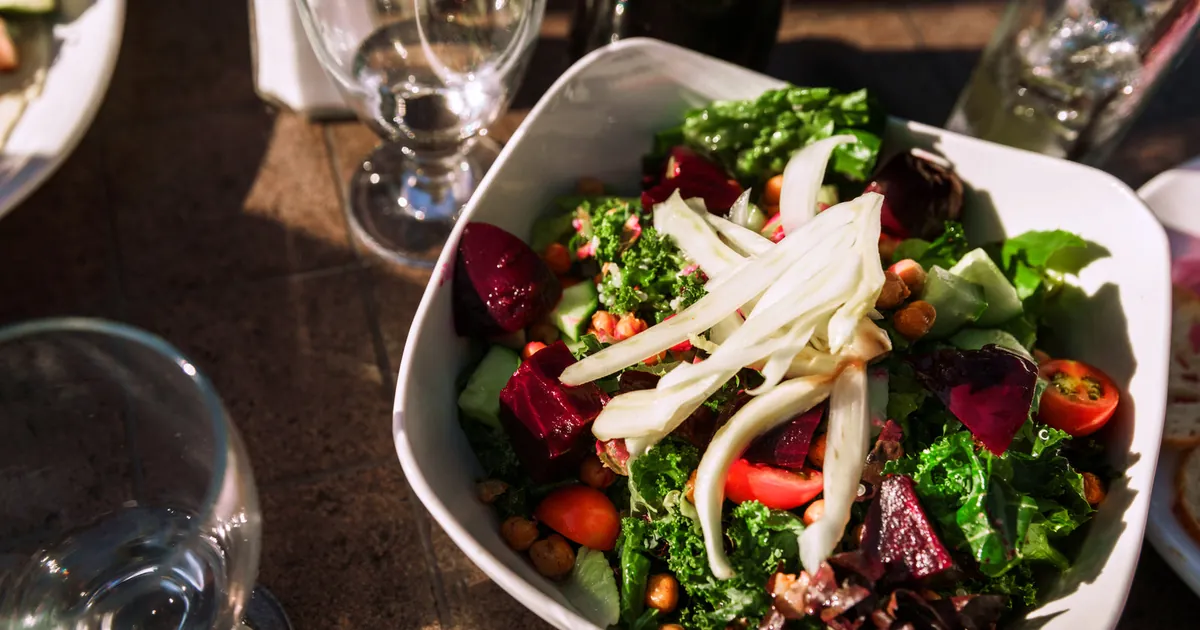
Eating out is one of life's pleasures, and it shouldn't come with guilt. But restaurant and takeaway meals are often larger, richer and saltier than food cooked at home. A few simple habits let you enjoy them while still eating in a way that supports your health.
- Cooking words on the menu are strong clues: grilled, steamed, baked usually beat crispy, creamy, battered.
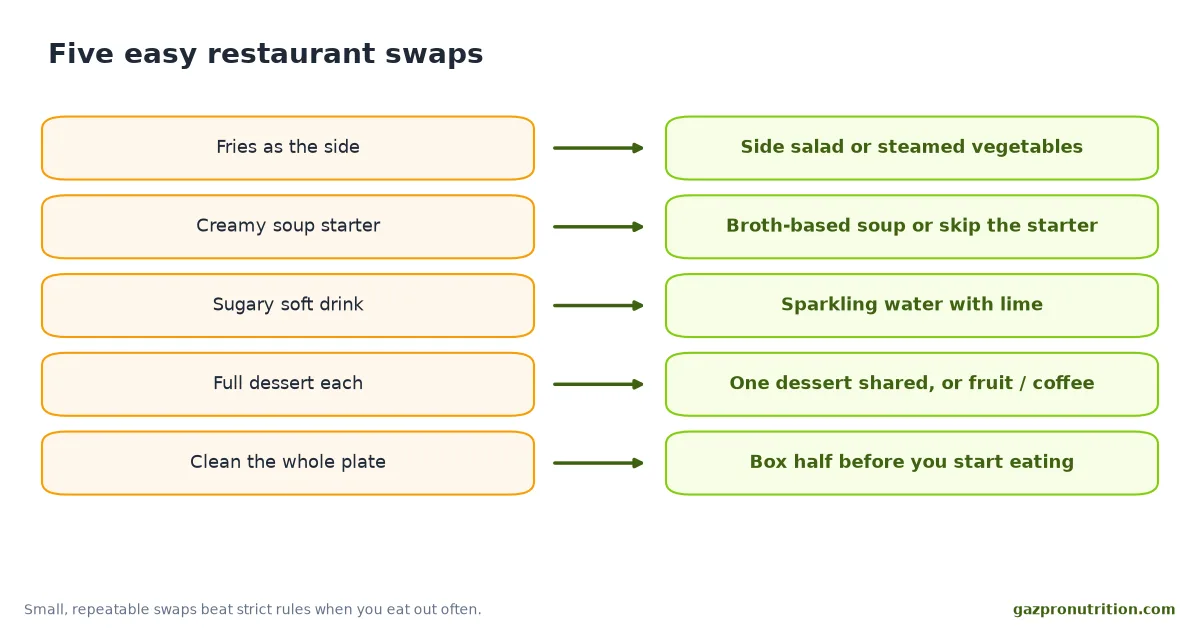
- Portions are often large — sharing or boxing half is a normal, sensible choice.
- Drinks, sides and sauces add up faster than the main dish.
- If you eat out often, habits matter; if it is rare, just enjoy it.
Why restaurant meals are different
Restaurants are designed to deliver flavour and satisfaction, and the fastest routes to flavour are fat, salt and sugar. Portions are also frequently larger than you would serve yourself at home, and people consistently eat more when they are served more — a finding confirmed by a large Cochrane review of portion size studies. None of this means restaurant food is "bad"; it simply means the default option is often more than you need.
Before you go
Most restaurants publish their menus online. Taking two minutes to look in advance lets you choose calmly instead of deciding while hungry and surrounded by tempting descriptions. Many chains also publish nutrition information. In the US, restaurant chains with 20 or more locations must show calories on menus, and in England, large food businesses have been required to display calorie information since April 2022. These numbers are most useful as a comparison tool — for example, discovering that a salad with creamy dressing and fried toppings contains more energy than a grilled burger.
It also helps not to arrive ravenous. "Saving up" by skipping meals all day often leads to over-ordering. A normal lunch or a small snack beforehand makes it much easier to eat to comfortable fullness.
Decoding the menu
Menu descriptions give you strong clues about how a dish has been cooked. Words that describe lighter methods tend to mean less added fat; words that describe frying, cream or rich glazes usually mean more.
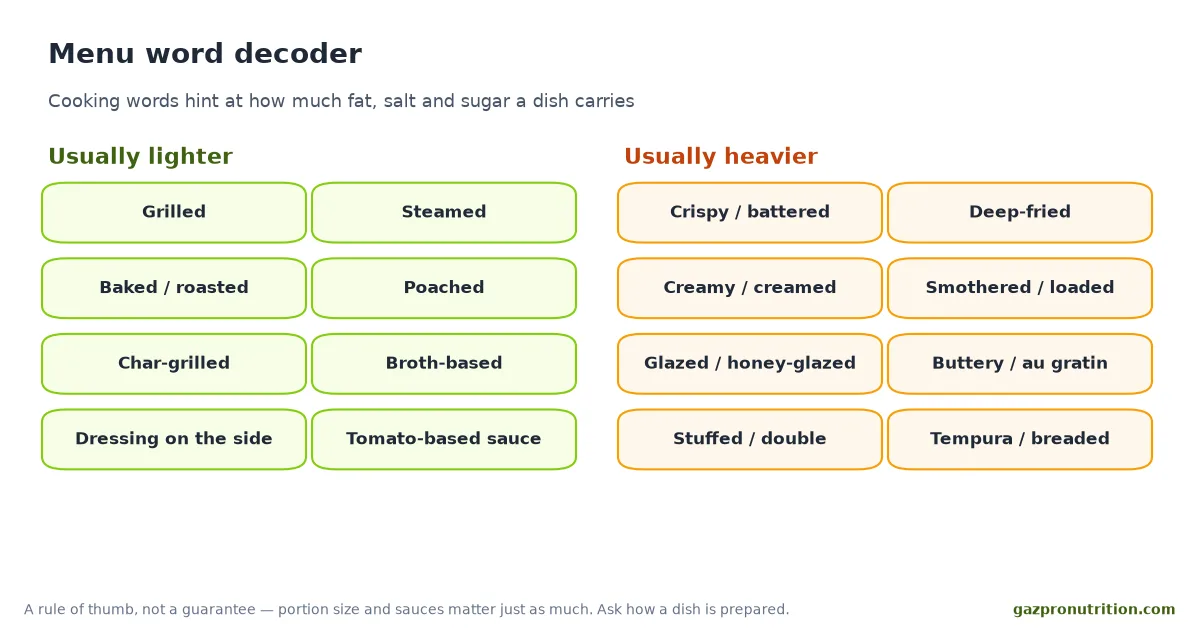
It is also fine to ask questions. Most kitchens are happy to tell you whether something is fried, to grill instead of fry, to swap chips for a salad or vegetables, or to serve dressing and sauce on the side. Having sauces on the side is one of the simplest changes you can make, because it puts you in control of how much you use.
Building a balanced restaurant meal
The same plate principles that work at home work in restaurants. Look for a main dish built around a protein source — fish, chicken, beans, tofu or lean meat — and make sure there are plenty of vegetables, either in the dish or as a side. Starchy sides such as chips, rice, bread and pasta are the part of a restaurant meal that tends to be most oversized, so they are a good place to scale back or share.
Drinks, bread baskets and desserts
Drinks are easy to overlook. Regular soft drinks, milkshakes, sweetened iced teas and many cocktails can contain as much energy as a small meal and a large amount of sugar — see our guide to added sugar for the numbers. Water, sparkling water with lime, unsweetened tea or coffee are simple defaults. If you drink alcohol, alternating each drink with a glass of water slows you down and helps with hydration.
The bread basket and pre-meal snacks can add a lot before the main course arrives. If you really enjoy them, have some and scale back your starchy side. If you don't, ask for them not to be brought. For dessert, sharing one between two or three people usually satisfies the wish for something sweet with a fraction of the amount. Fruit, sorbet or a coffee are lighter alternatives.
Cuisine-by-cuisine tips
| Cuisine | Often lighter choices | Watch out for |
|---|---|---|
| Italian | Minestrone, grilled fish or chicken, tomato-based pasta sauces, thin-crust pizza with vegetables | Cream sauces (carbonara, alfredo), large pasta portions, garlic bread |
| Chinese | Steamed dishes, stir-fried vegetables, steamed rice, clear soups | Battered and deep-fried dishes, sweet-and-sour sauces, fried rice, high-salt sauces |
| Indian | Tandoori dishes, tikka (grilled), dal, vegetable curries, plain rice or chapati | Creamy kormas and masalas, ghee-rich dishes, naan, fried starters |
| Japanese | Sashimi, sushi with fish and vegetables, miso soup, edamame, grilled fish | Tempura, katsu, rolls with mayonnaise-based sauces, large amounts of soy sauce |
| Mexican | Grilled fajitas, bean dishes, salsa, soft corn tortillas, salads | Deep-fried chips and shells, lots of cheese and sour cream, large burritos |
| Burger / fast food | Single patty, grilled chicken, side salad, water | Double patties, bacon and cheese, large fries, sugary drinks, milkshakes |
Takeaways and delivery at home
Takeaway meals come with a hidden advantage: you control the plate. Serve a sensible portion onto a plate instead of eating from the containers, add a quick salad or microwaved frozen vegetables, and refrigerate leftovers straight away for another meal. Many delivery apps also show nutrition or allergen information, which makes comparing options easier.
Social eating without stress
Meals out are about company, celebration and culture, not only nutrition. It helps to decide in advance what matters most to you — perhaps you really want dessert, so you choose a lighter main. Eating slowly and putting your fork down between bites helps you notice fullness. If someone pressures you to eat more, a friendly "it was delicious, I'm just full" is enough.
Most importantly, one meal doesn't make or break your health. What matters is the pattern across weeks and months. If you eat out several times a week, the habits in this guide are worth building. If it is an occasional treat, the best advice may simply be to enjoy it and return to your usual routine at the next meal.
Allergies and medical diets
If you have a food allergy, coeliac disease or a medical condition that requires a specific diet, always tell staff clearly and ask about ingredients and preparation. In the UK and EU, food businesses must be able to tell you if a dish contains any of the 14 major allergens. For personalised advice, speak with your doctor or a registered dietitian.
Frequently asked questions
Can you eat healthily at restaurants?
Yes. Choosing lighter cooking methods, asking for sauces on the side, adding vegetables and managing portion size make most menus workable.
What are the healthiest cooking methods on a menu?
Grilled, steamed, baked, roasted and poached dishes are usually lighter than fried, battered, creamy or crispy options.
Should I look at calorie information on menus?
If it is available, it can be a useful comparison tool, especially for spotting unexpectedly high-calorie drinks, sides and desserts.
How often is it fine to eat out?
There is no fixed rule. If you eat out often, small habits matter more; if it is an occasional treat, simply enjoy it.
References
- U.S. FDA — Calorie labeling on restaurant menus
- UK Government — Calorie labelling (out of home sector) regulations 2021
- Cochrane Review — Portion, package or tableware size and consumption (Hollands et al., 2015)
- NHS — Eat well when eating out
- Harvard T.H. Chan School of Public Health — Healthy Eating Plate
- CDC — Tips for eating out and dining healthier
This article is general information and not a substitute for personalised advice from a doctor or registered dietitian. Charts and graphics on this page were created by Gazpro Nutrition from the sources listed; the lead photo is a real photograph licensed from Burst by Shopify and credited beneath the image. Spotted an error? See our corrections policy.