How Much Added Sugar Is Too Much? Limits, Labels and Easy Swaps

Sugar is not poison, and a little of it can make healthy food more enjoyable. But added sugar is easy to overdo because so much of it arrives in drinks and packaged foods we don't think of as sweet treats. This guide explains the limits in plain numbers and shows how to cut back without feeling deprived.
- Limits apply to free / added sugars, not the sugar naturally found in whole fruit or plain milk.
- UK adults: no more than 30 g a day (about 7 teaspoons). WHO: under 10% of energy, ideally under 5%.
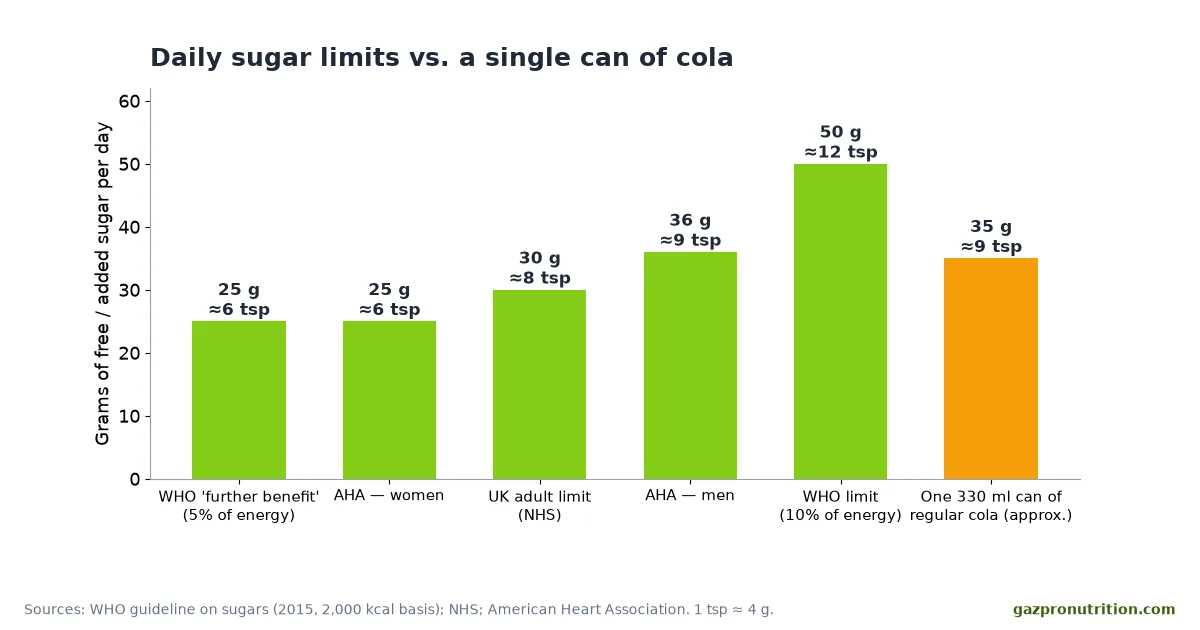
- A single 330 ml can of regular cola contains roughly 35 g.
- Sugary drinks are usually the easiest place to make a big difference.
Free sugar, added sugar and natural sugar
Not all sugar is treated the same in nutrition guidance. Added sugars are sugars and syrups put into foods during processing or preparation, or added at the table. The WHO uses a slightly broader term, free sugars, which includes all added sugars plus the sugars naturally present in honey, syrups, fruit juices and fruit juice concentrates.
What doesn't count is the sugar inside intact whole fruit and vegetables, and the lactose naturally present in plain milk and yogurt. These come packaged with fibre, water, protein or other nutrients, and there is no evidence that eating them in normal amounts causes the problems linked with free sugars. That is why an orange and a glass of orange juice are treated differently: the juice counts as free sugar, the whole fruit doesn't.
The official limits, in grams and teaspoons
The WHO's 2015 guideline recommends reducing free sugars to less than 10% of total energy intake, with a further reduction to below 5% bringing additional benefits. On a typical 2,000 kcal diet, that's roughly 50 g and 25 g respectively. The UK sets a maximum of 30 g of free sugars a day for adults and older children. The American Heart Association suggests no more than about 25 g (6 teaspoons) of added sugar a day for most women and 36 g (9 teaspoons) for most men.
Why too much added sugar is a problem
The WHO's recommendation was based mainly on evidence about body weight and tooth decay. Free sugars add energy without making you feel particularly full — especially in drinks — so it is easy to consume a lot without noticing. Over time that can contribute to weight gain. Frequent sugar intake also feeds the bacteria that cause dental caries, which is why dentists care about how often you have sugar, not just how much.
High intakes of sugar-sweetened beverages have also been associated in large observational studies with a higher risk of type 2 diabetes and heart disease. These studies can't prove cause and effect on their own, but the consistency of the findings is one reason health bodies single out sugary drinks.
Where added sugar hides
Sweets, cakes and biscuits are obvious sources, but a large share of added sugar comes from foods and drinks many people see as everyday or even healthy: flavoured yogurts, breakfast cereals, cereal and granola bars, smoothies, fruit juices, flavoured coffees, sauces such as ketchup and barbecue sauce, and "low-fat" products where sugar has been used to replace flavour.
| Item (typical) | Approx. sugar | Share of UK 30 g limit |
|---|---|---|
| Regular cola, 330 ml can | ≈ 35 g | ≈ 115% |
| Orange juice, 150 ml glass | ≈ 13 g (counts as free sugar) | ≈ 45% |
| Flavoured yogurt, 125 g pot | ≈ 12–16 g (part from milk) | varies by brand |
| Ketchup, 1 tablespoon | ≈ 4 g | ≈ 13% |
| Plain whole apple | ≈ 10–13 g natural sugar | doesn't count |
Figures are typical values from standard food composition data and product labels; always check the label of the specific product you buy.
How to spot sugar on a label
In the US, the Nutrition Facts label has a separate line for Added Sugars with a % Daily Value based on 50 g per day, which makes things easy. In the UK and EU, labels show "Carbohydrate — of which sugars", which combines natural and added sugar. Traffic-light labels use these thresholds per 100 g: high above 22.5 g of total sugars and low at 5 g or less.
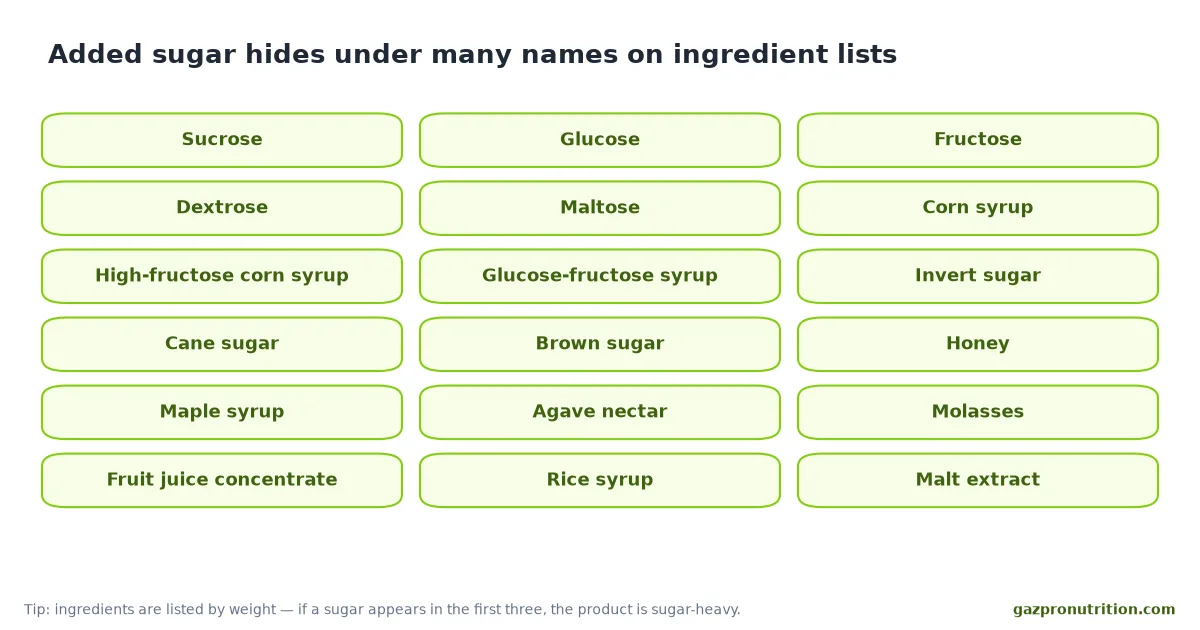
The ingredient list tells you whether sugar has been added. Ingredients are listed in order of weight, so if a sugar appears near the top, the product contains a lot of it. Manufacturers also often use several different sugars, which lets each one appear further down the list.
Practical swaps that make a real difference
Start with drinks. Swapping one daily can of regular soft drink for water, sparkling water, or unsweetened tea or coffee can remove more than a full day's worth of free sugar. If you like fizzy drinks, try sparkling water with a slice of citrus or a splash of juice, and reduce the juice over time.
- Breakfast: choose plain oats or wholegrain cereal and add fruit for sweetness instead of buying sweetened versions.
- Yogurt: buy plain yogurt and add berries or a little honey yourself — you will almost always use less than the manufacturer.
- Hot drinks: cut added sugar by half for two weeks, then half again. Taste adapts faster than most people expect.
- Snacks: keep fruit, nuts, plain popcorn or cheese and wholegrain crackers within reach. Our healthy snacking guide has more ideas.
- Baking: many recipes still work with a quarter to a third less sugar, especially with vanilla, cinnamon or ripe fruit.
What about sweeteners?
Low- and no-calorie sweeteners can help some people move away from very sugary drinks. However, in 2023 the WHO issued a guideline advising against using non-sugar sweeteners as a way to control body weight, because long-term evidence doesn't show lasting benefit for body fat in adults or children. The practical takeaway: diet drinks can be a stepping stone, but getting used to less sweetness overall — mostly water and unsweetened drinks — is the more reliable long-term goal.
Keeping it in perspective
You don't need to eliminate sugar or fear fruit. A birthday cake or a dessert at a restaurant is part of normal life. The aim is to make added sugar an occasional pleasure rather than a background constant in drinks, cereals and sauces. For most people, fixing drinks and breakfast gets them most of the way to the recommended limits.
If you have diabetes or another medical condition that affects how your body handles sugar, follow the advice of your healthcare team, as your targets may be different.
Frequently asked questions
How many grams of sugar a day is too much?
The WHO advises keeping free sugars below 10% of energy (about 50 g on a 2,000 kcal diet) and ideally below 5% (about 25 g). UK guidance sets a maximum of 30 g of free sugars a day for adults.
Does the sugar in fruit count?
Sugar naturally present in whole fruit, vegetables and plain milk does not count towards free sugar limits. Fruit juice, smoothies, honey and syrups do count.
Is honey healthier than table sugar?
Honey contains tiny amounts of other compounds, but nutritionally it is still mostly sugar and counts as free sugar.
Are artificial sweeteners a good replacement?
They can help some people move away from sugary drinks, but the WHO advises against relying on non-sugar sweeteners for weight control. Water and unsweetened drinks are the simplest long-term choice.
References
This article is general information and not a substitute for personalised advice from a doctor or registered dietitian. Charts and graphics on this page were created by Gazpro Nutrition from the sources listed; the lead photo is a real photograph licensed from Burst by Shopify and credited beneath the image. Spotted an error? See our corrections policy.